
Europe is taking a decisive step toward energy security and sustainability with a landmark agreement to expand offshore wind power in the North Sea. On Monday, ten European countries (the United Kingdom, France, Germany, Belgium, Denmark, Ireland, Luxembourg, the Netherlands, Norway, and Iceland) signed a historic pact in Hamburg to develop 100 GW of offshore wind capacity. This ambitious project, sufficient to power 143 million homes, will link the turbines to multiple national electricity grids, creating a more integrated and resilient European energy system.
The initiative, known as the “Offshore Wind Investment Pact for the North Seas,” represents both an economic and strategic opportunity for Europe. Proponents estimate that the project could mobilize €1 trillion in economic activity, generate tens of thousands of jobs, and encourage investment in ports, manufacturing, and vessel infrastructure. In a period of heightened geopolitical uncertainty, the need for homegrown, reliable energy sources have become increasingly clear. The 2022 invasion of Ukraine by Russia underscored Europe’s vulnerability to energy supply disruptions. While liquefied natural gas imports from the United States have helped to fill the gap, they remain subject to global market volatility. Offshore wind offers a stable, domestic alternative.
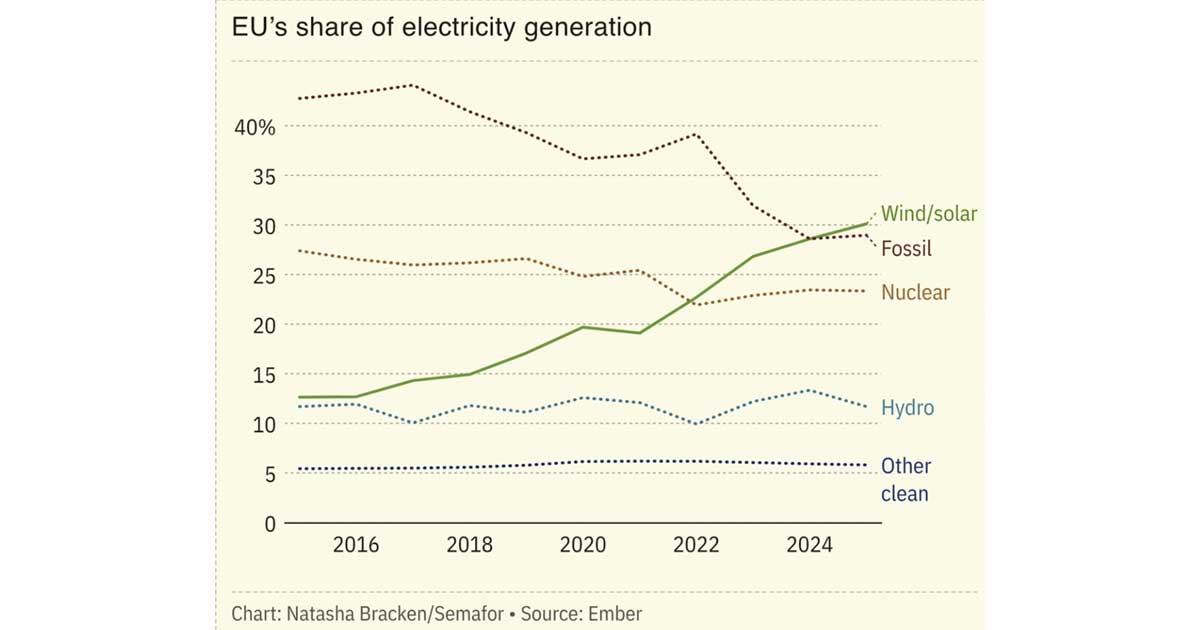 The pact sets clear targets for governments and the energy industry. Governments have pledged to provide planning certainty, regulatory support, and financial frameworks to de-risk investment. Among these measures is the adoption of two-sided Contracts for Difference (CfDs) as the standard for offshore wind auctions, ensuring predictable revenue streams for developers. Transmission system operators are expected to identify and coordinate cross-border projects, including hybrid installations that combine electricity generation with interconnection between countries. These hybrid projects will allow electricity to flow seamlessly between grids, optimizing supply and reducing the risk of shortages.
Technical Ambitions and Economic Implications
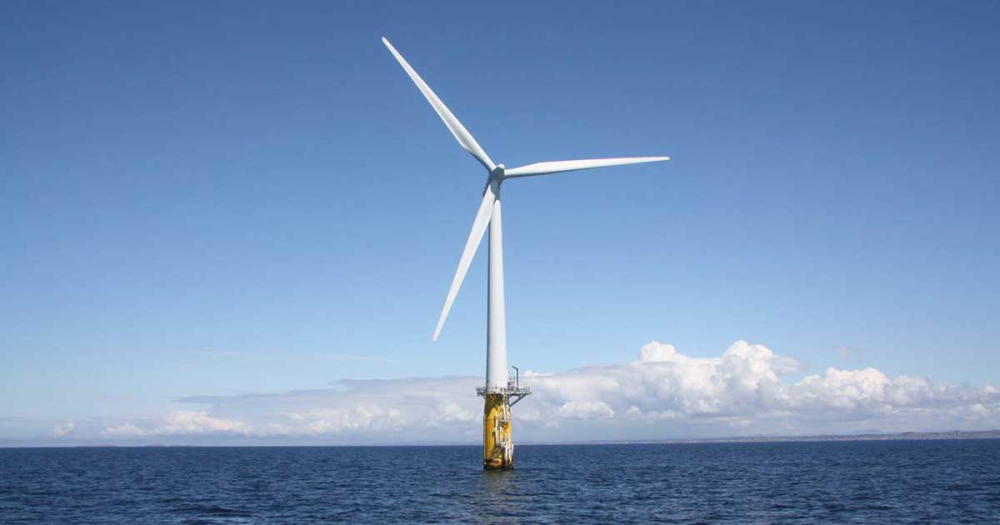
The scale of the project is unprecedented. Europe currently has approximately 37 GW of offshore wind capacity across 13 countries. The new pact would nearly triple this capacity by 2040. To achieve this, participating countries must coordinate on several fronts: port infrastructure, turbine manufacturing, subsea cabling, and maintenance operations. Industrial clusters are likely to develop around major ports, creating concentrated hubs of employment and investment.
From an economic standpoint, the benefits are substantial but require careful planning. The €1 trillion in projected economic activity includes construction, operation, maintenance, and supply chain expenditures. It also encompasses indirect benefits, such as technology exports, research and development, and local business growth. Conservative economists argue that such projects must remain cost-efficient and avoid overreliance on subsidies. The pact emphasizes practical, scalable solutions rather than experimental technologies, ensuring a balance between environmental objectives and economic prudence.
Europe’s experience with offshore wind to date provides reassurance. Costs have fallen by approximately 70% over the last decade due to improved turbine efficiency, economies of scale, and competitive auction mechanisms. The new agreement targets an additional 30% cost reduction by 2040, which would further enhance affordability for consumers and competitiveness for European industry.
The Hungarian Perspective
Hungary, while not directly bordering the North Sea, closely monitors developments as they influence regional energy markets and security. The Hungarian government has consistently prioritized energy sovereignty, cost control, and reliable supply. From Budapest’s perspective, Europe’s wind expansion is welcomed as it strengthens regional energy independence, reduces reliance on external suppliers, and contributes to stabilizing electricity markets.
Hungary’s energy strategy relies on a diversified mix of nuclear, natural gas, and domestic renewable sources such as solar and biomass. The government’s cautious approach emphasizes energy security first, then environmental objectives. While the North Sea pact signals an ambitious push toward renewables, Hungary underscores that integration must be fair and inclusive. The nation advocates for mechanisms that allow countries without direct access to offshore wind, like Hungary, to benefit through cross-border electricity trading, grid interconnections, and regional market cooperation.
Energy Security in a Changing Geopolitical Context
The North Sea wind initiative cannot be separated from Europe’s geopolitical landscape. The war in Ukraine demonstrated the fragility of overreliance on Russian gas pipelines. Although imports from alternative suppliers such as the United States have provided temporary relief, global LNG markets are volatile and vulnerable to political pressure. Expanding domestic renewable energy, particularly offshore wind, provides a buffer against these risks.
Energy security must be the primary consideration in planning renewable infrastructure. Projects should be scalable, resilient, and financially sustainable. The North Sea pact reflects this philosophy: it sets clear, achievable targets, emphasizes proven technology, and links national grids to reduce systemic risk. For Hungary and other Central European countries, these developments provide both lessons and cautionary tales. Integration into a pan-European energy system must be balanced with national control and affordability for citizens.
Ultimately, Europe’s wind push is about more than environmental stewardship. It is a strategic investment in economic resilience, energy independence, and geopolitical stability. When executed with care, pragmatism, and cooperation, it promises a stronger, more secure, and cleaner Europe for decades to come.
References
Bracken, N. (2026, January 27). UK and Europe sign historic pact to drive clean energy future. GOV.UK. https://www.gov.uk/government/news/uk-and-europe-sign-historic-pact-to-drive-clean-energy-future?
WindEurope. (2026, January 27). North Sea summit: Investment pact to mobilise €1tn in offshore wind investments for Europe. WindEurope. https://windeurope.org/news/north-sea-summit-investment-pact-to-mobilise-e1tn-in-offshore-wind-investments-for-europe/?
Semafor. (2026, January 27). European countries sign deal for major North Sea wind project. Semafor. https://www.semafor.com/article/01/27/2026/european-countries-sign-deal-for-major-north-sea-wind-project
WindFair. (2026, January 27). Offshore wind pact is a giant leap towards powering Europe with renewable, secure and cost-competitive electricity. WindFair. https://w3.windfair.net/wind-energy/news/48398-offshore-wind-pact-is-a-giant-leap-towards-powering-europe-with-renewable-secure-and-cost-competitive-electricity?
The Brussels Times. (2026, January 26). North Sea nations unite to combat energy threats with clean projects. The Brussels Times. https://www.brusselstimes.com/eu-affairs/1937814/north-sea-nations-unite-to-combat-energy-threats-with-clean-projects
Germany Federal Ministry for Economic Affairs and Energy. (2026, January 26). More cross‑border expansion of offshore wind energy and strengthening of the offshore sector: Germany hosting the 2026 international North Sea Summit | BMWE. Bundesministerium für Wirtschaft und Energie.
Afloat.ie Team. (2026, January 27). Ireland to co‑operate on turning North Sea into “clean energy reservoir”. Afloat.ie.