

Recent observations in Antarctica over the past three to four years reveal a measurable acceleration of ice loss in regions of the eastern Antarctic Ice Sheet (EAIS) that were historically considered stable.
This emerging trend raises concerns about a potential climate tipping point with implications extending beyond the polar regions. While direct effects on Europe and other distant populations remain limited and largely indirect, they may include subtle sea-level rise, perturbations in global oceanic circulation such as the Antarctic Circumpolar Current, and increased pressure on international governance frameworks, including the Antarctic Treaty, to prevent unregulated exploitation and preserve long-term climate stability.
Antarctica, home to approximately 90% of the world’s freshwater ice, is a critical component of the global climate system, influencing both sea levels and atmospheric and oceanic circulation. Historically, research has focused on the comparatively unstable western Antarctic Ice Sheet (WAIS) due to its documented ice loss and vulnerability to marine ice sheet instability. However, recent high-resolution satellite data and in situ measurements indicate that the EAIS, long presumed stable, is now experiencing accelerated ice mass loss in several sectors, particularly in Wilkes Land and George V Land. These observations suggest that the threshold for irreversible ice sheet collapse may be approaching sooner than previously anticipated, underscoring the urgency for careful monitoring, modeling, and international climate governance.
Observed Trends in Antarctic Ice Loss
Over the past three to four years, a convergence of satellite altimetry data, gravimetric measurements, and ice velocity observations has revealed that the EAIS, which had previously remained largely stable despite global warming pressures, is now losing ice at rates that are modest compared to the WAIS but nevertheless significant when considered within the context of long-term climate projections; the observed acceleration in ice discharge has been linked primarily to increased basal melting from the intrusion of relatively warmer circumpolar deep water into subglacial cavities and ice shelves, as well as to enhanced surface melt driven by rising austral summer temperatures, with early indications that these processes may act synergistically, such that even small perturbations could amplify regional ice instability over decades.
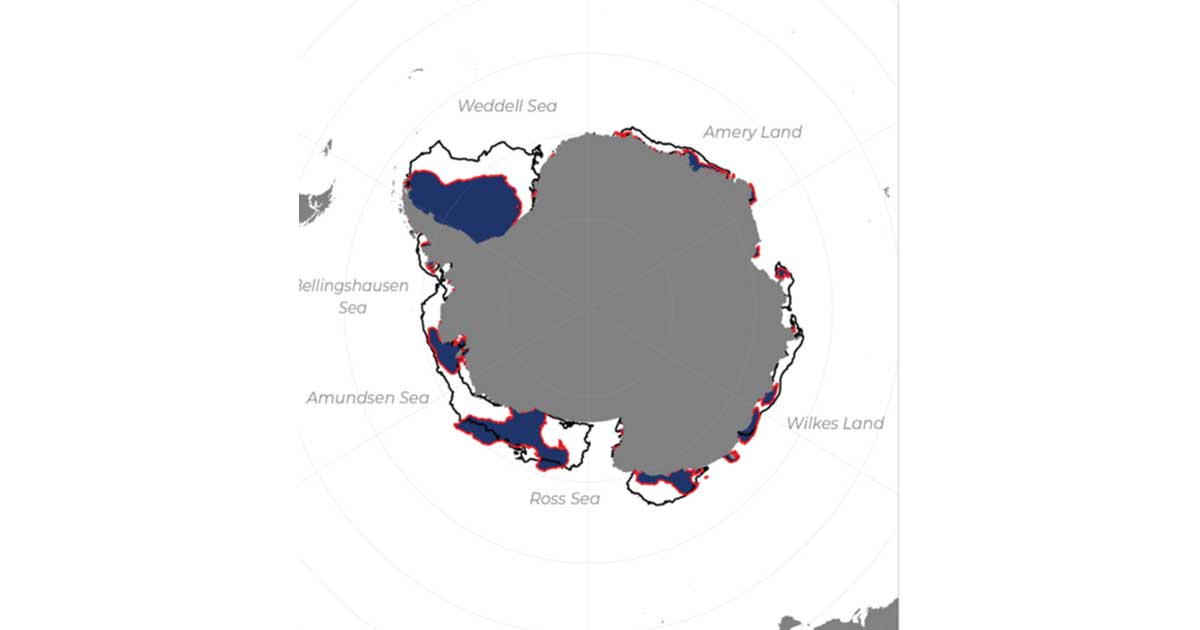 Figure 1. Antarctic sea ice extent (red) for 25 February 2025. The black line represents the 1993-2010 long-term average (climatology) for the same day of the year.
Source: European Union, Copernicus Marine Service Data 2025 I © Mercator Ocean
Comparisons Between Western and Eastern Ice Sheets
The WAIS has long been recognized for its susceptibility to ice shelf collapse, grounding line retreat, and marine ice sheet instability due to its bathymetric configuration and exposure to warm ocean currents; by contrast, the EAIS, encompassing a significantly larger volume of ice, had been considered comparatively inert, with stable grounding lines and limited surface melt, but the newly observed ice loss in the eastern sectors suggests that no part of Antarctica is immune to climate-driven perturbations, and that previous assumptions of eastern ice sheet stability may need to be reevaluated within the context of ongoing global warming and oceanic circulation changes.
Circumpolar Current and Ocean Dynamics
The Antarctic Circumpolar Current (ACC), which circulates around the continent and connects the Atlantic, Pacific, and Indian Oceans, serves as a critical component of the Earth’s climate engine by distributing heat, salt, and nutrients globally, and any perturbation to its strength or velocity has the potential to produce cascading effects throughout the climate system; recent observations suggest that the ACC has experienced a slight slowing, which is hypothesized to result from increased freshwater input from accelerating Antarctic ice melt, thereby altering the density gradients that drive oceanic flow and potentially influencing regional sea level variations and marine ecosystem dynamics.
Figure 2. Diagram shows the path of the Antarctic Circumpolar Current (also called the West Wind Drift) that flows around Antarctica (dark blue). The Subtropical Convergence marks the boundary between the cold waters to the south and the warm waters to the north
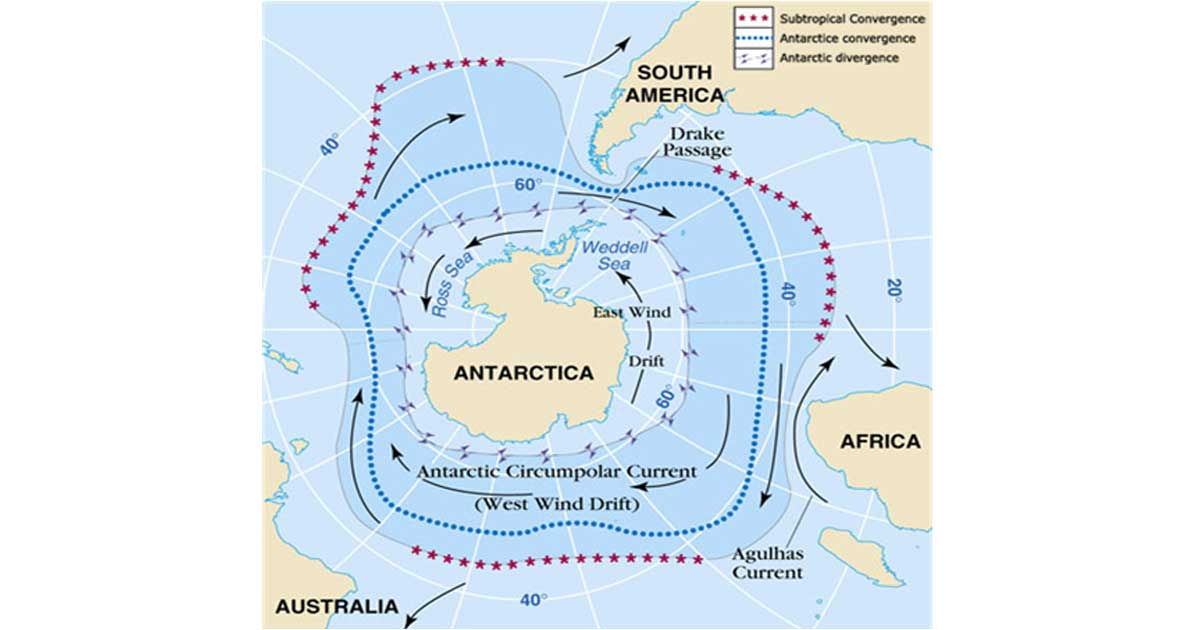 Source: Pearson Prentice Hall, 2024
Eastern Antarctic Melting in the Past 3-4 Years
The sudden onset of measurable ice loss in the eastern sectors of Antarctica over the past three to four years represents a major scientific development, as these regions had been previously categorized as largely impervious to short-term climate perturbations; satellite gravimetry has revealed localized mass deficits, while ice shelf thinning and increased grounding line retreat in regions such as Wilkes and George V sectors suggest that even the largest and thickest ice formations are now vulnerable to warming oceans and atmospheric changes.
How Antarctic Melting Affects Europe and Our Lives
Although Antarctica may seem geographically distant, its rapidly melting ice sheets are already influencing Europe in profound and interconnected ways. The primary pathways through which Antarctic ice melt affects Europe include sea-level rise, disruptions in oceanic circulation, and subsequent changes in regional climate patterns. Incremental sea-level rise increases the risk of coastal flooding in major European urban areas and low-lying regions, such as Rotterdam, Venice, and the northern German river deltas. In Rotterdam, projections suggest that by 2100, sea levels could rise by up to 1.3 meters, exacerbating flooding risks and necessitating extensive flood defenses. In Venice, already grappling with high tides and sinking foundations, rising seas compound existing vulnerabilities. Low-lying agricultural areas, including the Dutch polders, are also threatened, facing potential saline intrusion, infrastructure damage, and long-term socioeconomic impacts such as higher insurance premiums and more frequent repairs.
The melting of Antarctic ice also perturbs global oceanic circulation. The Antarctic Circumpolar Current (ACC), the strongest ocean current worldwide, is slowing due to increased freshwater input, and the Atlantic Meridional Overturning Circulation (AMOC) may also be affected. These disruptions can shift prevailing wind patterns and storm trajectories, leading to altered seasonal weather, precipitation, and temperature variability across Europe. Countries that rely heavily on stable climatic conditions for agriculture and hydropower production are particularly vulnerable. Southern Europe may experience droughts that strain irrigation and energy systems, while northern regions could face increased rainfall, flooding, and soil erosion, all of which threaten crop yields and economic stability. Changes in temperature and precipitation patterns can further disrupt agriculture, affecting crops such as wheat and maize and undermining food security. These climatic shifts also influence energy demand, as extreme heat or cold increases the need for cooling or heating, while hydropower production becomes less predictable due to altered river flows and precipitation patterns.
European fisheries and food supply chains are similarly impacted. Altered ocean currents and temperatures influence marine ecosystems, causing fish species to migrate to cooler waters and disrupting traditional fishing patterns. Changes in the Southern Ocean, which supports about three-quarters of global phytoplankton production, the base of the marine food chain, can alter nutrient flows and threaten the foundation of marine ecosystems. These ecological shifts can lead to economic losses, market volatility, and increased competition for resources, while changes in seafood availability have implications for dietary health and food security across European populations. Moreover, Antarctic ice melt can affect global ocean temperatures and salinity, indirectly influencing fisheries in the North Atlantic, the North Sea, and the Mediterranean, which are critical for European economies and local communities dependent on fishing livelihoods.
In addition to these effects, Antarctic ice melt has broader environmental ramifications that indirectly affect Europe. Rising sea levels and changing ocean currents can accelerate coastal erosion, alter wetland ecosystems, and threaten biodiversity hotspots that provide critical ecosystem services. Shifts in atmospheric circulation and storm patterns may increase the frequency and intensity of extreme weather events, such as heatwaves, cold snaps, or intense rainfall, amplifying risks to human health, agriculture, and infrastructure. Furthermore, changes in oceanic carbon absorption and feedback loops associated with melting ice could accelerate global warming, intensifying climate-related challenges for European countries and amplifying the urgency for coordinated mitigation strategies.
Addressing these challenges requires integrated approaches that combine emission reduction, sustainable infrastructure development, climate adaptation, and international cooperation. Urban planning in flood-prone areas must incorporate resilient designs, early-warning systems, and strategic retreat measures where necessary. Agricultural practices must adapt through crop diversification, efficient water management, and innovative technologies to maintain productivity under shifting climatic conditions. Energy systems should be diversified and optimized to account for variability in supply and demand, while fisheries management must be flexible to respond to changing marine ecosystems.
Map 1. Potential sea level rise and affected coastal regions under Antarctic melt scenarios in Europe. Much of the European coast would be affected by a 2 m (red) sea level rise, while it would take a few thousand years to reach 25 m (yellow). The maps show areas within 2 and 25 m of current sea levels.
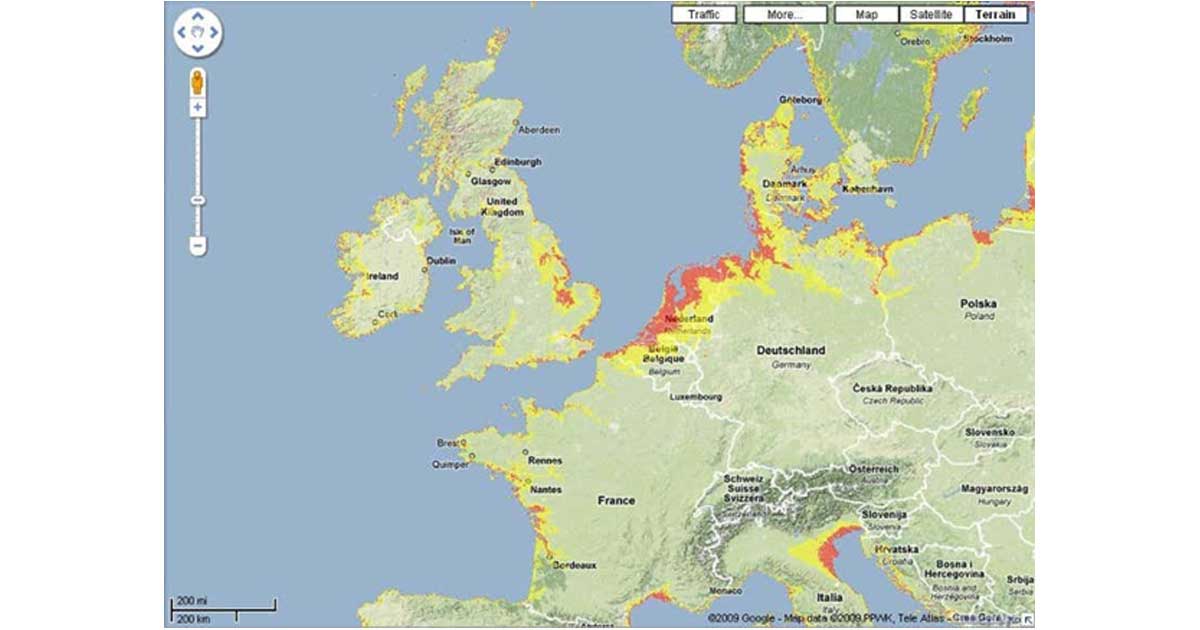
Source: Google, map data 2009 PPWK, Tele Atlas.
Governance Considerations: The Antarctic Treaty
The Antarctic Treaty, established in 1959, was designed to preserve Antarctica as a region dedicated to peaceful scientific research while preventing territorial disputes and the unregulated exploitation of natural resources. Over six decades later, this governance framework remains one of the most important mechanisms for managing human impacts on the continent. Its relevance has grown considering recent observations indicating accelerated Antarctic ice loss.
The Antarctic Treaty functions not only as a political instrument but also as a critical enabler of coordinated scientific research. By regulating access, controlling resource exploitation, and fostering collaboration, it ensures that ice sheet monitoring, satellite observation, and in situ studies can continue uninterrupted. Weakening of treaty enforcement or a failure to renew key provisions could open the door to increased geopolitical competition for mineral, fossil fuel, or marine resources. Such activity could disturb ice shelves and grounded ice through infrastructure development, shipping traffic, or localized warming, potentially accelerating ice loss in sensitive regions. Moreover, uncoordinated resource extraction could undermine long-term climate research, delaying our understanding of ice sheet dynamics, feedback loops, and tipping points.
The consequences of diminished governance may not be immediately visible in Europe, but over the medium to long term, they could be profound. Enhanced ice sheet destabilization would contribute to faster sea-level rise, amplify disruptions to ocean currents like the Antarctic Circumpolar Current and AMOC, and increase the likelihood of extreme climate events. Furthermore, the loss of rigorous scientific oversight could impede early warning systems and predictive models, leaving European policymakers and coastal communities less prepared for the cascading impacts of Antarctic ice melt. Strengthening and modernizing the Antarctic Treaty to account explicitly for environmental protection in the context of accelerating ice loss is therefore not only a matter of regional geopolitics but a global climate imperative.
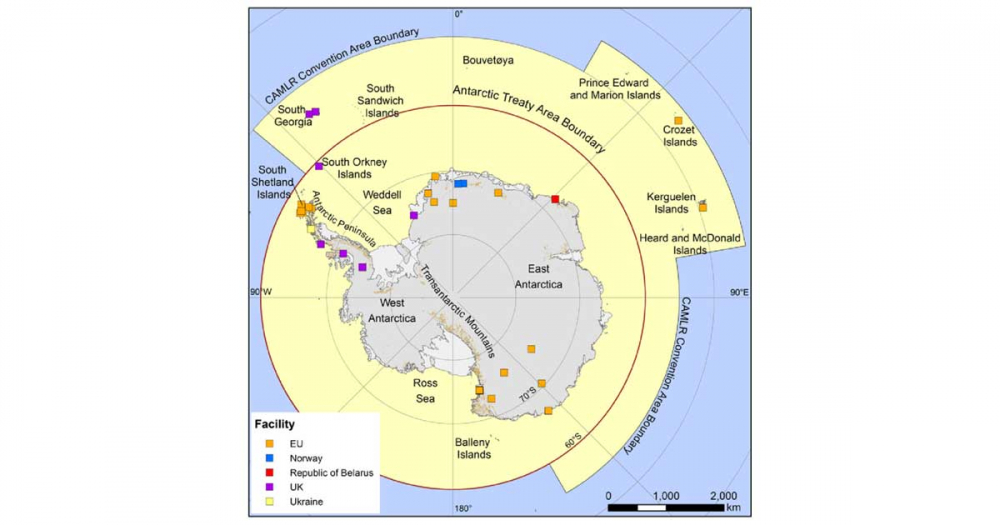
Figure 2. Diagram illustrating Antarctic Treaty zones and research stations operated by European nations. CAMLR Convention = Convention for the Conservation of Antarctic Marine Living Resources; EU = European Union.
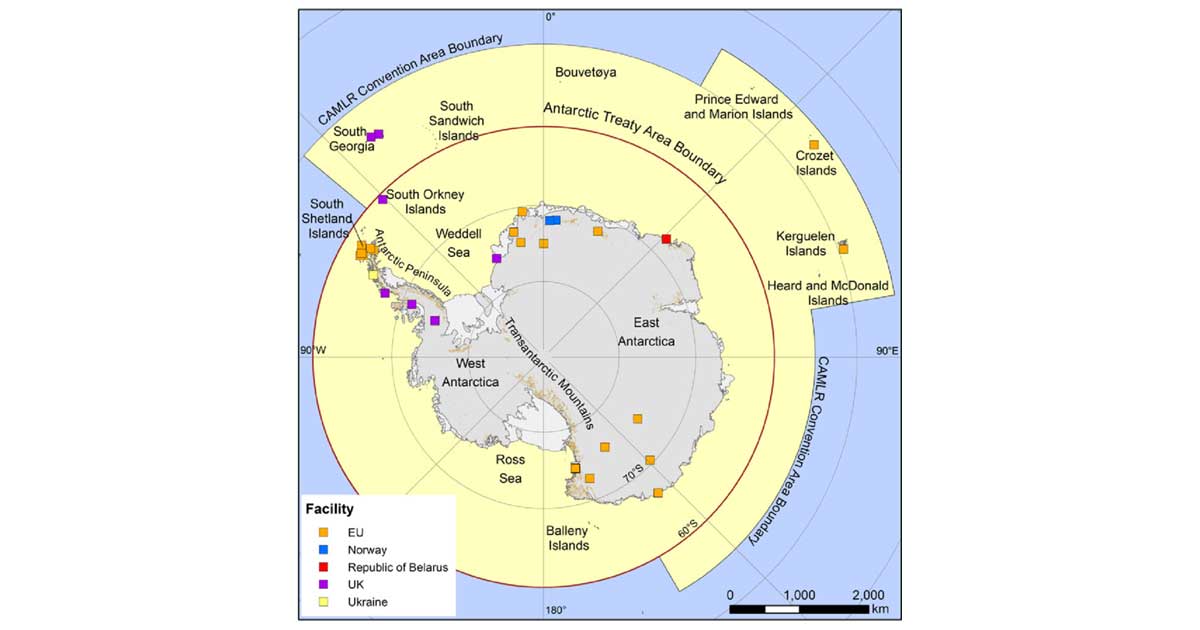 Source: Hughes, K. A., Constable, A. J., Frenot, Y., & Xavier, J. C. (2018). Map of the Antarctic region, showing the Antarctic Treaty and CAMLR Convention areas. In Antarctic environmental protection: Strengthening the links between science and governance.
Conservative Risk Assessment
Currently, the probability of a sudden collapse or dramatic transformation of the Antarctic ice sheet remains very low. The scientific consensus emphasizes that such events are more plausible over extended timescales, ranging from decades to centuries. Observed changes, including the moderate but accelerating ice mass loss in East Antarctica, should be interpreted primarily as early warning signals rather than immediate indicators of global threat. In the short term, Europe faces primarily indirect risks: modest sea-level rise, incremental shifts in storm patterns, and economic burdens associated with coastal adaptation. Over longer timescales, particularly in the Southern Hemisphere, continued ice loss may induce more significant disruptions to ocean circulation, regional climate systems, and marine ecosystems. These changes could, in turn, generate indirect pressures on economic stability and food security in the Northern Hemisphere. The primary uncertainty at present does not concern the likelihood of imminent collapse, but rather the rate and interplay of these processes. Accordingly, sustained monitoring, cautious risk management, and enhanced international collaboration are essential to detect early signals of potential tipping points.
Conclusion
The rapid loss of Antarctic ice, particularly in regions of the eastern ice sheet that have only recently begun to show measurable retreat, represents a potential climate tipping point whose consequences extend far beyond the polar regions, with indirect implications for Europe in the form of incremental sea level rise, subtle but meaningful shifts in oceanic and atmospheric circulation, and broader governance considerations associated with the Antarctic Treaty; by adopting a conservative, data-driven perspective, policymakers and scientists can focus on continued monitoring, reinforcement of international cooperative frameworks, and integration of polar ice observations into European climate adaptation strategies, thereby mitigating the risk of underestimating future climate vulnerabilities while avoiding alarmist projections that lack empirical support.
References
Abram, N. J., et al., ‘Emerging evidence of abrupt changes in the Antarctic environment’, Nature, vol. 644, pp. 621–633, 2025, https://www.nature.com/articles/s41586-025-09349-5.
BBC Earth, ‘Why Antarctica’s melting ice sheet should concern us all’, https://www.bbc.com/earth/story/why-antarctica-s-melting-ice-sheet-should-concern-us-all.
British Antarctic Survey, ‘Why does melting Arctic ice matter beyond the ice?’, https://www.bas.ac.uk/about/antarctic-ice-matter/.
European Environment Agency, ‘The melting Arctic’, https://www.eea.europa.eu/publications/the-melting-arctic.
Frontiers in Environmental Science, ‘Antarctic extreme events’, 2023, https://www.frontiersin.org/articles/10.3389/fenvs.2023.1229283/full.
Hughes, K. A., et al., ‘Map of the Antarctic region, showing the Antarctic Treaty and CAMLR Convention areas’, in Antarctic environmental protection: Strengthening the links between science and governance, Springer, 2022, https://link.springer.com/book/10.1007/978-3-030-81253-9.
Mosoni, C., et al., ‘Cross-border dimensions of Arctic climate change impacts and implications for Europe’, WIREs Climate Change, 2024, https://doi.org/10.1002/wcc.905.
Reuters, ‘Rapid loss of Antarctic ice may be climate tipping point, scientists say’, 2025, https://www.reuters.com/article/us-climate-antarctica-idUSKBN2A10W8.