


Over the past four decades, China’s remarkable economic growth has lifted hundreds of millions of people out of poverty. As a result, the country is not only a leader in several industries but also the world’s largest carbon emitter, responsible for a third (31 percent) of global carbon dioxide (CO2) emissions, roughly double the share produced by the United States.
China and global CO2 emissions
Although China’s contribution to global CO2 emissions only began at a substantial level in the 21st century, the country is now the second largest producer of cumulative CO2 output. However, this remains only half the amount turned out by the United States, where industrialization started far earlier.
China accounts for over half of the world’s steel and cement production, and CO2 emissions caused by these two sectors alone in China exceed the European Union’s entire CO2 output.
China emitted 10.67 billion tons of carbon dioxide in 2020, making the country by far the world’s biggest emitter. While the COVID-19 pandemic led to major emissions reductions in most countries, China was one of the few nations which saw a continuing rise in carbon emissions.
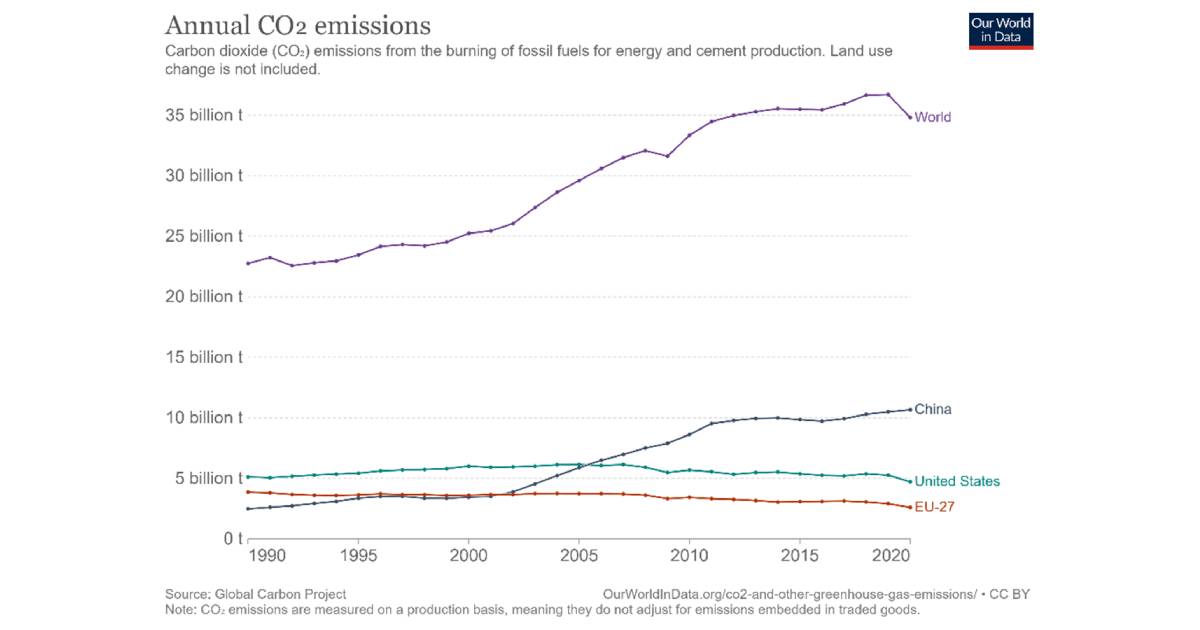 Figure 1: China’s annual carbon dioxide emissions, 1990-2020 (billion tonnes)
Source: Our World in Data (2022)
In 2020, China announced an ambitious plan to peak CO2 emissions before 2030 and become carbon neutral by 2060. This would necessitate a profound shift away from fossil fuel-powered transport and energy. With nearly 90 percent of China’s greenhouse gas emissions coming from the energy sector, energy policy is at the heart of the country’s transition to carbon neutrality. The gap between the two national targets is thirty years. By comparison, the gap is 71 years for the EU, 43 years for the U.S. and 37 years for Japan.
China and clean renewables
While China has made significant progress in the transition to green energy, it continues to face major challenges. Coal accounts for over 60 percent of the country’s electricity generation and Beijing continues to build new coal plants domestically. At the same time, China is creating more solar power capacity annually than any other country. It is the world’s second largest consumer of oil, but it is also home to 70 percent of the global production capacity for electric vehicle batteries. China is pursuing a clear path toward a more sustainable, secure, and inclusive future in terms of its energy policy. In line with the enhanced ambitions announced in 2020, the China Roadmap sets a path meant to see CO2 emissions peak before 2030 and the achievement of carbon neutrality prior to 2060.
Under the Roadmap, the main drivers of emissions reductions are improving energy efficiency, increasing energy sources, and cutting back on the use of coal. Energy generation from renewable energy sources, mainly wind and solar, is set to increase sevenfold between 2020 and 2060, accounting for almost 80 percent of China’s energy mix by then. Industrial CO2 emissions will fall by nearly 95 percent by the target year, and the role of emerging innovative technologies such as hydrogen and carbon capture will increase substantially from 2030 onward.
Because more jobs are being created in growing, low-carbon energy technologies than are being lost in declining fossil fuel-based industries, these changes are reinvigorating the Chinese labor market. The Roadmap also examines China’s potential to implement an even faster transition to clean energy, which would result in the country’s CO2 emissions falling nearly 20 percent below current levels by the year 2030.
In addition to the major benefits of climate change mitigation, social and economic advantages include greater prosperity for regions that have not yet fully profited from China’s economic development, as well as increased net job creation across the country. Furthermore, investment needs are not a barrier to a speedier transition since cumulative investments in this case largely mirror a slower process.
In a further positive step toward curbing global emissions, China announced that it will stop financing and building new coal plants overseas in September 2021. As well as halting new projects, phasing out operational coal plants is also important to keep warming less than 1.5 degrees Celsius above pre-industrial levels. With half the world’s coal-fired power plant capacity, China has a major role to play in this. At the same time, however, the country cannot rely solely on the deployment of renewable energy and electric vehicles to meet its climate targets; China’s nuclear power generation is extremely significant.
China and nuclear power
In mid-2021, there were 52 operational nuclear reactors in China, including the China Experimental Fast Reactor (CEFR), reconnected to the grid after a long-term outage. Nuclear power plants generated 345 TWh in 2020, up 4.4 percent from 2019; this was the lowest annual growth rate since 2009. Nuclear power stations stably provide 4.9 percent of the country’s electricity generation. On a global scale, China operates by far the youngest nuclear fleet, with 40 units, or almost one in five, connected to the grid in the last decade. In the absence of new construction programs, the average age of the world’s operational nuclear reactor fleet – excluding China – is expected to reach 30.9 years by mid-2021.
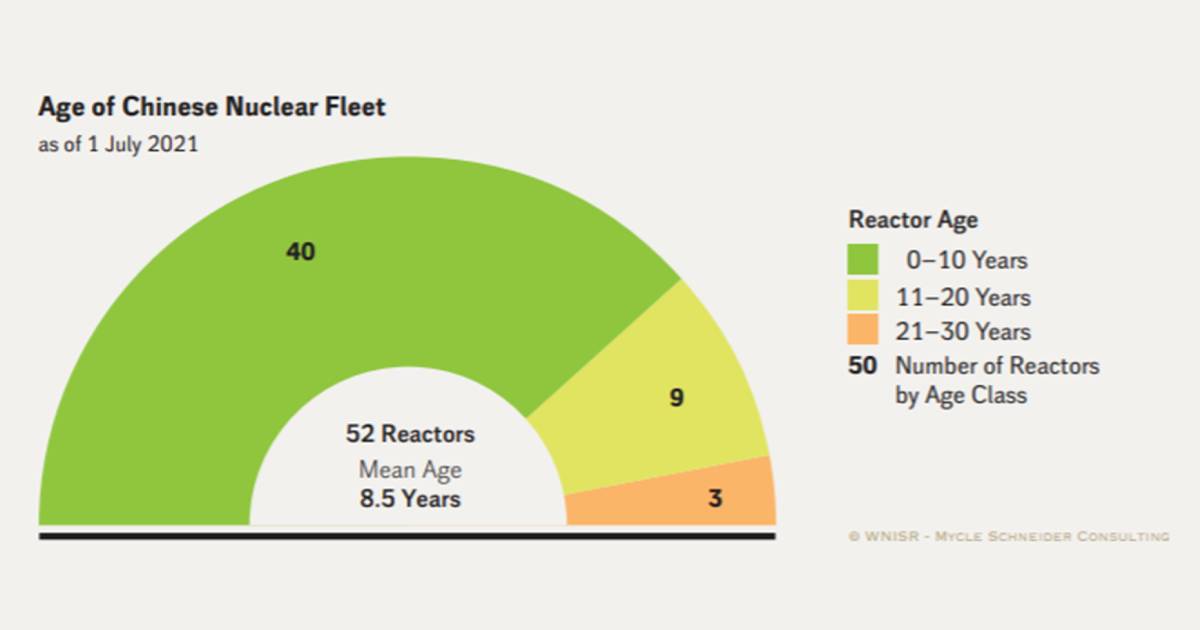 Figure 2: Age breakdown of the Chinese nuclear fleet
Source: WNISR, 2021
Pushing France into third place, China was the second-largest producer of nuclear electricity in 2020 after the United States. Despite the announcement of ambitious targets to cut carbon emissions in the 2021-2015 five-year plan, disclosed in March 2021, only 70 GW of total nuclear capacity was envisaged by the end of 2025, with the nuclear industry taking a back seat to renewables. Renewable energy capacities continue to grow rapidly in China. According to the International Renewable Energy Agency (IRENA), total installed renewable capacity increased by nearly 18 percent last year, rising from 759 GW in 2019 to 894 GW in 2020. Wind capacity, expanding from 210 GW in 2019 to 282 GW in 2020, including 9 GW of offshore capacity, accounted for the largest component of expansion; solar capacity progressed from 205 GW in 2019 to 254 GW in 2020.
China and COP26
The end of the 26th session of the UN Framework Convention on Climate Change in Glasgow saw the adoption of the so-called Glasgow Climate Pact. The document identifies coal as a fossil fuel, the use of which in energy production shall be reduced in the long term. The original draft resolution, blocked at the last minute by China and India, included the phase-out of coal; consequently, only a major phase-down was included in the declaration, and no deadline was set. The failure to approve such a clearly necessary measure has been a disappointment. In a surprise announcement made at the COP26 climate summit, China and the U.S. agreed to step up climate cooperation between the two countries over the next decade.
The world’s two largest carbon emitters committed themselves to act in a joint declaration, agreeing on a range of issues, including methane emissions, the transition to clean energy and decarbonization. The declaration states that China is to cut back on its carbon use over the period of the 15th five-year plan and will do its utmost to accelerate the process. A key moment of the climate summit was the pledge by a total of 105 countries to reduce global methane emissions by 30 percent up until the year 2030. China, however, refused to sign the agreement to limit methane, instead pledging to develop a national plan to tackle the emission of greenhouse gas.
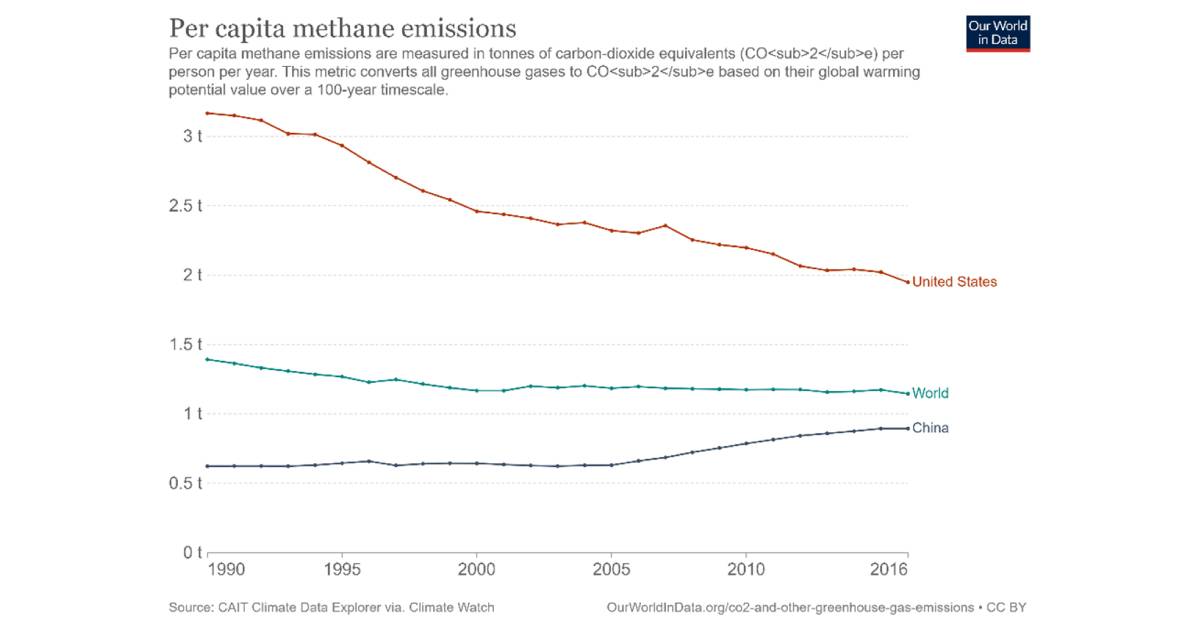 Figure 3: Per capita methane emissions in tonnes of CO2 equivalents
Source: Our World in Data (2022).
For the first time since the start of the economic recovery after the COVID-19 pandemic, China’s CO2 emissions fell by around 0.5 percent in July-September 2021 compared to a year earlier. The decline in the country’s CO2 output could mark a turning point and an early peak in China’s total emissions, years ahead of the original target of reaching a peak before 2030.
China and carbon reduction
China’s ambitious low-carbon targets will be no easy task to meet and this must not come at the expense of energy and food security or sacrificing the “normal life” of ordinary people, Chinese President Xi Jinping has announced, signaling a more cautious approach to climate change as the economy slows. With the country’s economy losing steam, China is concerned about the risk to jobs and growth. With Beijing preparing to hold a Communist Party meeting later this year that is expected to extend Xi’s rule, worries continue to mount; Xi has told Communist Party leaders that China must move beyond the idea of quick success and take a gradual approach.
Reducing emissions is not about cutting back on productivity, nor does it imply bringing down emissions to absolute zero. China’s energy supply should be based on the safe and reliable adoption of new sources of energy while gradually phasing out conventional fuels. Although China has pledged to accelerate the transition to renewables, it will only start reducing the use of coal – a major source of CO2 – after 2025. The state planning agency also said in December that it is looking at relaxing overall restrictions on energy consumption to ensure that environmental targets do not undermine growth.
Despite the seemingly ambitious promises put forward in a joint statement between China and the U.S., the Chinese president appears to be backtracking. According to Mr. Xi, one should not hope for quick success and
emissions reductions do not equal production cuts and especially not the complete elimination of emissions.
The presidential announcement suggests that China is seeking to avoid a repetition of last year’s energy shortages and Mr. Xi’s primary concern is maintaining his grip on power.