
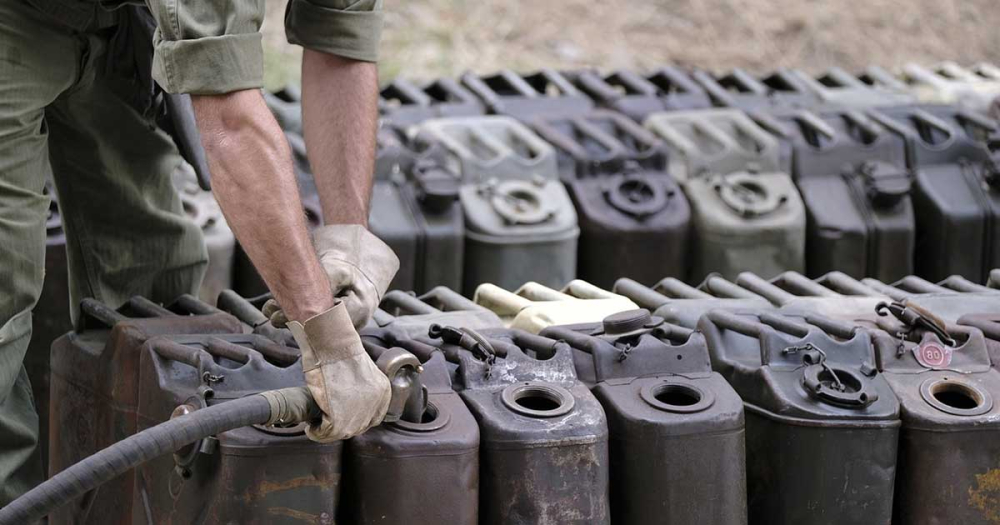

The temporary suspension of crude oil deliveries through the Druzhba (Barátság) pipeline in early 2026 exposed the structural vulnerabilities of Central Europe’s energy system. For Hungary, the disruption represented far more than a technical interruption in energy infrastructure. It became a strategic economic shock with immediate implications for fuel markets, industrial competitiveness, and macroeconomic stability.
Energy security has long been a defining feature of Hungary’s economic policy debates. As a landlocked country with limited domestic hydrocarbon resources, Hungary relies heavily on imported energy supplies. Crude oil imports remain overwhelmingly dependent on pipeline infrastructure developed during the Cold War. For decades, the Druzhba pipeline has served as the backbone of this supply network, transporting Russian crude oil from the east into Central Europe.
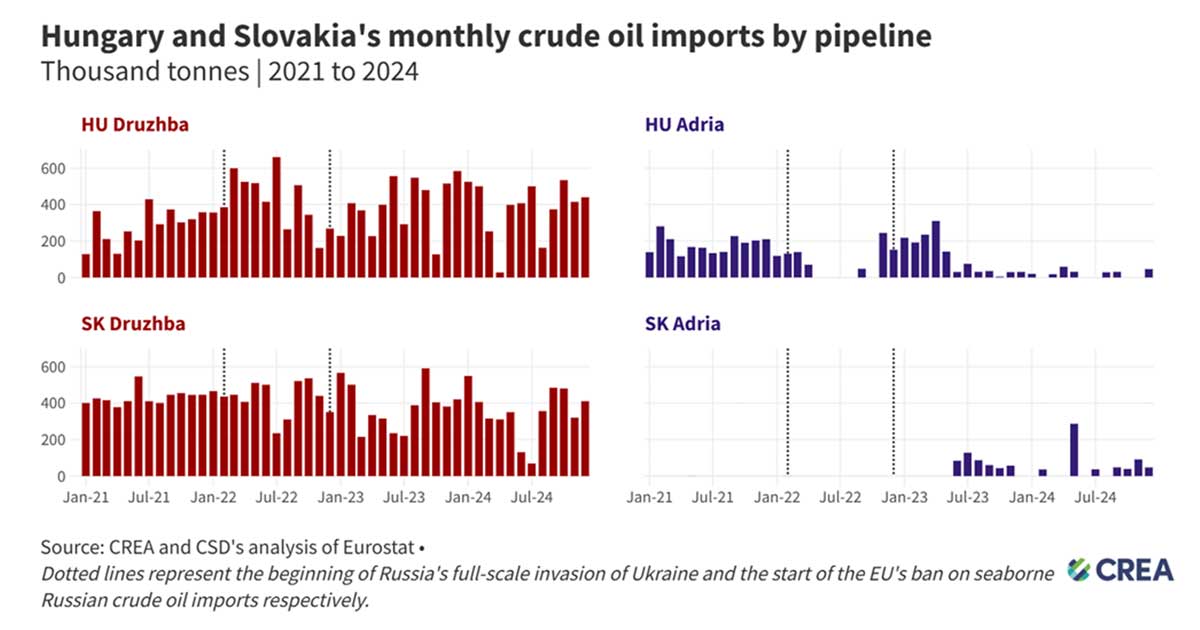
In recent years, more than two-thirds of Hungary’s crude imports have arrived through Druzhba. Russia continues to dominate the country’s oil supply structure, with estimates suggesting that roughly 87-92 percent of Hungary’s oil imports originate from Russian sources. This high level of concentration has often been criticized in European policy debates, yet it also reflects decades of infrastructure development and refinery optimization tailored specifically to this supply route.
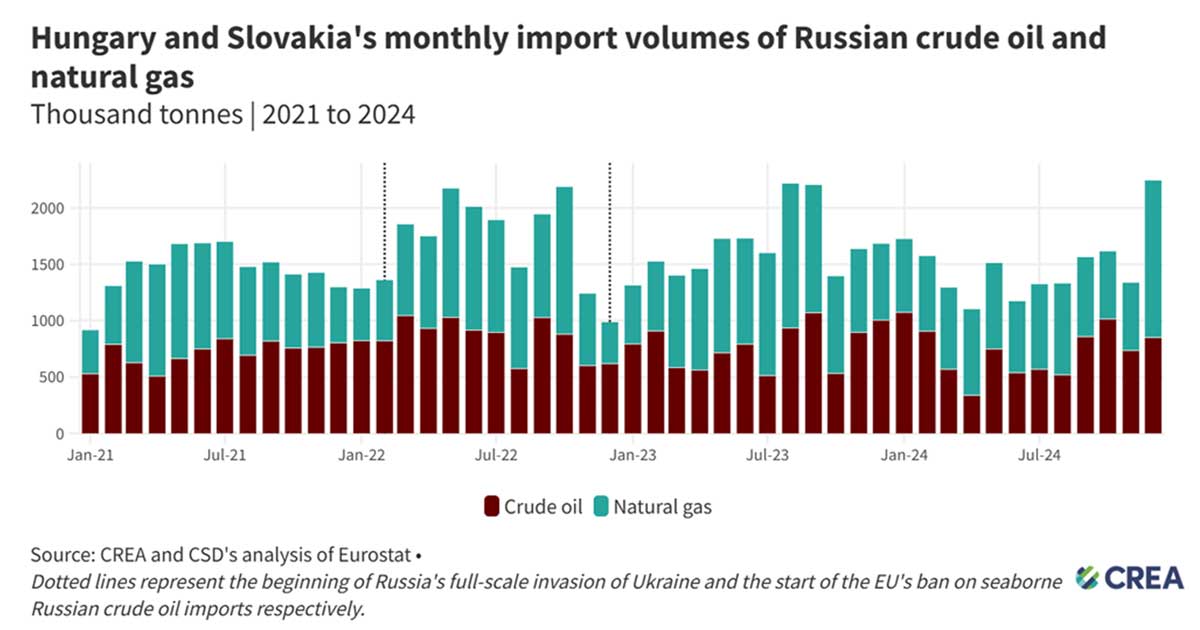 When deliveries through Druzhba were halted in January 2026 following infrastructure damage in Ukraine, Hungary and neighbouring Slovakia suddenly faced the challenge of maintaining refinery operations while preventing instability in fuel markets. Although alternative supply routes exist, replacing Druzhba deliveries is neither simple nor inexpensive. The economic consequences therefore extend well beyond logistics and into broader questions of competitiveness, inflation, and economic resilience.
 Understanding the economic implications of the Druzhba disruption requires examining several interconnected dimensions. These include the impact on oil price volatility, the operational challenges facing refineries designed for Russian crude, the financial costs associated with switching supply routes, and the potential effects on Hungary’s industrial competitiveness. Together, these factors illustrate how energy infrastructure disruptions can ripple through an entire national economy.
 Oil Price Volatility and Market Reactions
Energy markets respond rapidly to uncertainty. Even temporary supply disruptions can trigger immediate price fluctuations, particularly when they affect major infrastructure systems such as cross-border pipelines.
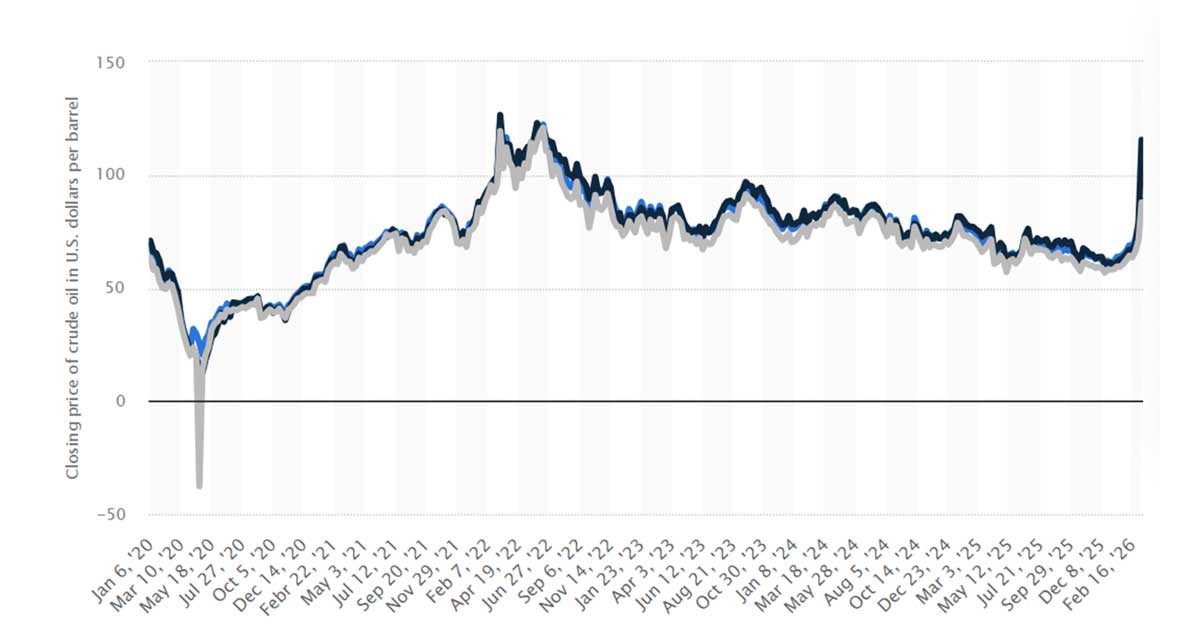
When crude deliveries through Druzhba stopped in late January 2026, regional energy markets reacted almost instantly. Traders quickly priced in the possibility of prolonged supply constraints across Central Europe. At the global level, geopolitical tensions combined with supply uncertainty pushed crude oil prices above 119 dollars per barrel, marking one of the highest levels seen in recent years.
Closing price of Brent, OPEC basket, and WTI crude oil (in U.S. dollars per barrel)
 For Hungary, these developments were especially sensitive because energy prices play a central role in the country’s inflation dynamics. Fuel costs affect not only transportation but also logistics, agriculture, and industrial production. When oil prices rise sharply, the effects quickly spread across the broader economy.
Household consumption is also highly exposed to fuel price fluctuations. Rising petrol and diesel prices can rapidly translate into higher living costs, creating political and social pressure for government intervention. In economies where transportation and logistics are essential for export-oriented industries, fuel price volatility can also undermine business planning and investment confidence.
In response to the market turbulence, the Hungarian government introduced temporary fuel price caps to prevent sudden retail price increases. The policy set maximum prices of 595 forints per litre for petrol and 615 forints per litre for diesel. The measure was designed as a short-term stabilization tool aimed at shielding both consumers and businesses from immediate market shocks.
While price interventions remain controversial in economic policy debates, they reflect a broader strategic priority within Hungary’s economic framework: protecting domestic stability during periods of external turbulence. From a policy perspective, energy markets are not treated as purely commercial arenas but as strategic sectors where sudden volatility can carry significant macroeconomic consequences.
Refinery Challenges and the Role of MOL
Hungary’s oil refining sector is dominated by the MOL Group, one of Central Europe’s largest integrated energy companies. MOL operates major refineries in Százhalombatta in Hungary and Bratislava in Slovakia, both of which have historically processed Russian Urals crude delivered through the Druzhba pipeline.
These refineries were designed and optimized over decades to handle the specific chemical composition of Urals crude. While modern refinery technology allows for some flexibility in processing different crude types, switching feedstock is rarely costless.
Alternative crude oils often differ in sulphur content, density, and refining characteristics. Processing such crude may require operational adjustments that reduce efficiency or increase maintenance costs. In practical terms, this means that although MOL refineries are technically capable of operating without Russian crude, doing so may lead to lower output efficiency and reduced profitability.
Industry analysts suggest that processing alternative crude blends can reduce refining efficiency and increase operational costs. Lower efficiency ultimately translates into narrower refining margins and potentially higher wholesale fuel prices. These costs can eventually be passed on to consumers and industrial users.
The refinery issue therefore illustrates a key challenge in energy policy: infrastructure built for one supply system cannot be transformed overnight without significant economic consequences. Even when alternative supply routes exist, the compatibility of refining infrastructure remains a crucial factor determining how quickly energy systems can adapt to geopolitical disruptions.
The Cost of Switching Supply Routes
When Druzhba deliveries stopped, Hungary increased reliance on the Adria pipeline, which transports oil from the Adriatic Sea to Central Europe. The pipeline connects maritime oil shipments arriving at the Croatian port of Omišalj with refineries in Hungary and Slovakia.
 From a purely technical perspective, the Adria pipeline has sufficient capacity to replace Druzhba deliveries. It can transport roughly 280,000 barrels of oil per day, which exceeds the approximate 200,000 barrels per day previously supplied through Druzhba to Hungary and Slovakia.
However, economic realities complicate this substitution. Pipeline transit fees, shipping costs, and logistical adjustments all influence the total cost of alternative supply routes. Even when nominal transit tariffs appear comparable, the broader supply chain associated with seaborne imports introduces additional expenses.
Maritime transportation adds shipping costs, while port operations and storage facilities create further logistical requirements. In addition, refinery scheduling and transport coordination must be adjusted when supply chains change suddenly.
As a result, industry estimates indicate that oil delivered through the Adria pipeline can be significantly more expensive than crude transported via Druzhba. In certain scenarios, total supply costs may be several times higher once maritime transport and logistical adjustments are included.
These cost differences have direct implications for Hungary’s economic competitiveness. Higher input costs in the energy sector ultimately translate into higher fuel prices, increased industrial costs, and potentially weaker export performance.
Industrial Competitiveness and Economic Stability
Hungary’s economy is strongly export-oriented and heavily integrated into European manufacturing supply chains. Major sectors such as automotive production, chemical manufacturing, and logistics rely on stable energy prices to maintain competitive cost structures.
Energy costs influence production decisions in multiple ways. Higher fuel prices increase transportation expenses; while rising refinery costs can push up the price of petrochemical inputs used in manufacturing processes. Over time, these pressures can erode profit margins for industrial producers.
Global competition further amplifies the impact of energy costs. Manufacturers in Europe must compete with producers in regions such as the United States and Asia, where energy prices are often significantly lower. If European energy costs rise substantially above those of competing regions, investment flows may gradually shift elsewhere.
This dynamic explains why energy security remains a central pillar of Hungary’s economic strategy. Affordable and reliable energy supplies are viewed not only as a domestic policy priority but also as a prerequisite for maintaining long-term industrial competitiveness.
In this context, disruptions such as the Druzhba outage are not merely temporary logistical challenges. They highlight structural vulnerabilities that can influence investment decisions, supply chain planning, and macroeconomic stability across the region.
Government Response and Market Stabilization
Hungary’s response to the Druzhba disruption reflects a pragmatic approach to crisis management in strategic sectors. Rather than relying exclusively on market adjustments, the government combined several policy tools to stabilize supply and prevent economic disruption.
Strategic oil reserves played a central role in this response. Hungary maintains reserves equivalent to at least ninety days of oil imports, in line with European Union regulations. These reserves provide a critical buffer during supply disruptions, allowing refineries and fuel distributors to continue operating while alternative supply routes are arranged.
At the same time, authorities coordinated closely with energy companies to increase imports through the Adria pipeline. Although this route is more expensive, it provides a vital backup supply channel that can temporarily replace Druzhba deliveries.
Fuel price stabilization measures were also introduced to prevent sudden increases in retail prices. While such interventions are typically temporary, they can reduce the immediate economic shock experienced by households and businesses.
Together, these policies illustrate the continued importance of state involvement in strategic energy markets. In periods of severe external disruption, purely market-based responses may not be sufficient to maintain economic stability.
Strategic Lessons for Energy Policy
The Druzhba pipeline disruption offers several important lessons for Hungary and the broader Central European region.
First, energy security remains an essential component of economic policy. Reliable and affordable energy supplies underpin industrial competitiveness and macroeconomic stability. Infrastructure disruptions can therefore have consequences far beyond the energy sector itself.
Second, infrastructure diversification must proceed gradually. While diversification is widely recognized as a long-term strategic goal, replacing existing supply systems overnight is rarely feasible. Energy infrastructure investments require years of planning, construction, and adaptation.
Third, the energy transition must remain economically realistic. Policies that ignore the technological and financial constraints of existing infrastructure risk imposing significant costs on national economies. Balancing environmental objectives with economic competitiveness will therefore remain a central challenge for European policymakers.
Hungary’s policy approach reflects this pragmatic perspective. Rather than pursuing abrupt structural shifts, the government emphasizes gradual diversification while preserving reliable supply routes that support economic stability.
Conclusion
The suspension of oil deliveries through the Druzhba pipeline in 2026 revealed the complex relationship between geopolitics, energy infrastructure, and economic stability in Central Europe.
For Hungary, the episode underscored several important realities. Supply disruptions can quickly trigger price volatility in fuel markets. Refineries optimized for specific crude types face efficiency losses when switching feedstock. Alternative supply routes, while technically feasible, often come with higher logistical and transportation costs. Perhaps most importantly, energy price increases can ripple through the broader economy, affecting industrial competitiveness, inflation, and investment decisions.
Hungary’s approach, using strategic reserves, alternative import routes, and temporary price controls, reflects a wider policy focus on keeping energy security at the heart of its economic strategy. While diversification of energy sources will continue over the long term, the Druzhba disruption demonstrates that energy systems cannot be transformed overnight without significant economic consequences. For Central Europe, the challenge is therefore not ideological but practical: managing the transition toward more diversified energy systems while protecting economic stability, industrial competitiveness, and national sovereignty.
References
Central and Eastern Europe Energy and Clean Air Initiative (CREA & CSD). (2025, May). The last mile: Phasing out Russian oil and gas in Central Europe – Hungary and Slovakia case study. Energy and Clean Air Platform.
European Commission. (2025). EU energy import dependency and diversification reports. Directorate-General for Energy. https://ec.europa.eu/energy/data-analysis
Eurostat. (2025). Energy statistics: Oil imports by country of origin. European Union.
Hungarian Energy and Public Utility Regulatory Authority (MEKH). (2025). Oil import and refinery capacity reports. Budapest, Hungary. https://www.mekh.hu
International Energy Agency (IEA). (2025). Oil market report – January 2026. Paris: IEA. https://www.iea.org/reports/oil-market-report-january-2026
Euromaidan Press. (2025, May 30). Hungary and Slovakia knowingly stay dependent on Russian energy, study shows.
World Bank. (2025). Brent crude oil historical price data 2020–2026. Washington, DC: World Bank Commodity Markets.