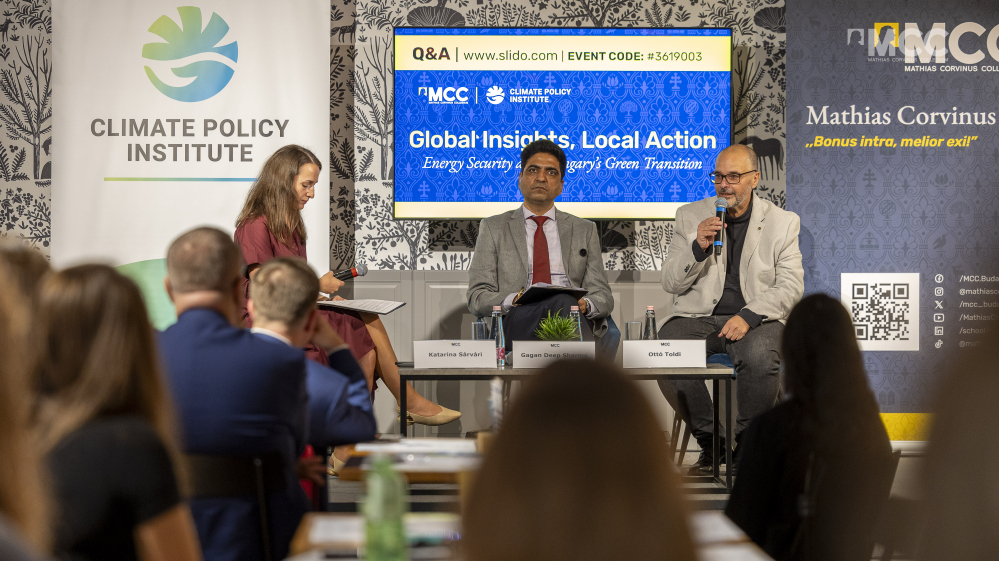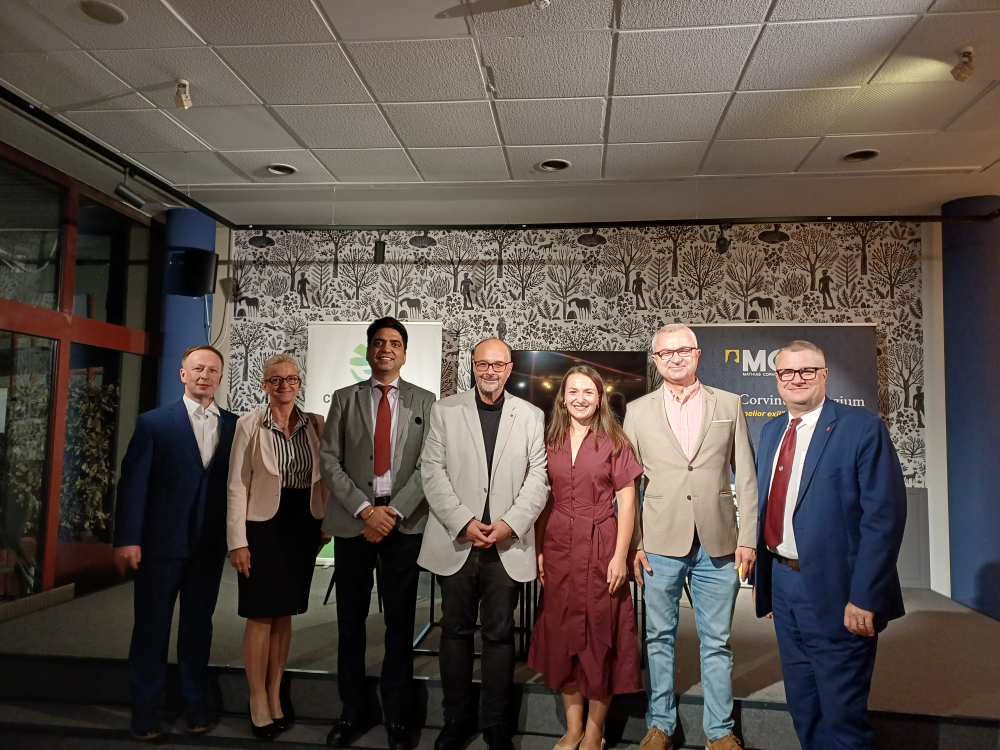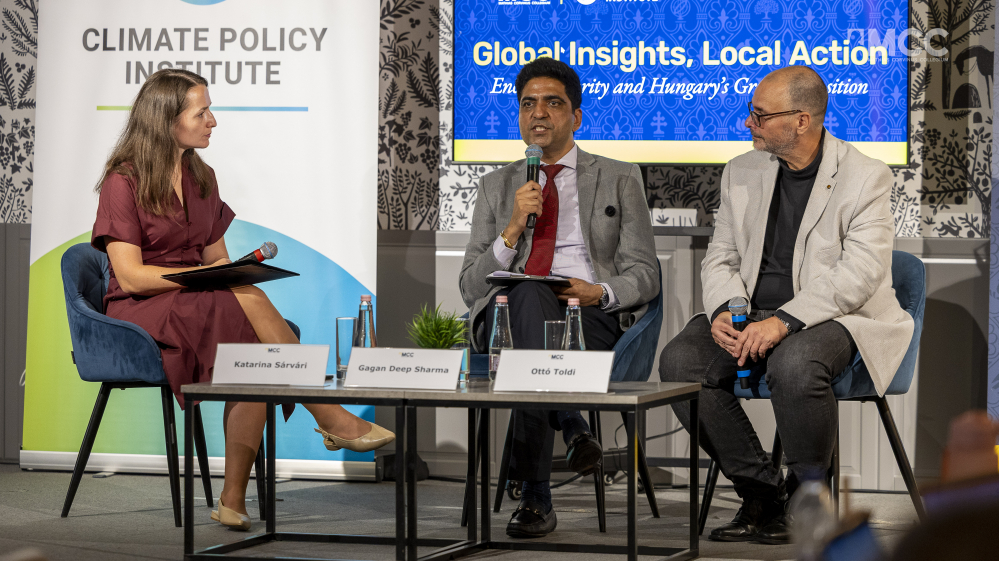

The Climate Policy Institute at MCC had the great pleasure of hosting the engaging international panel discussion “Global Insights, Local Action: Energy Security and Hungary’s Green Transition” on September 10th. The event was moderated by Dr. Katarína Sárvári, a researcher at the Climate Policy Institute, who guided the conversation with our distinguished guests, Prof. Dr. Gagan Deep Sharma from India and Dr. Ottó Toldi from Hungary, creating a dynamic exchange of ideas on global energy security, sustainable development, and the green transition.
Prof. Dr. Gagan Deep Sharma, Associate Director for International Affairs at Guru Gobind Singh Indraprastha University, New Delhi, highlighted India’s renewable energy potential, particularly in solar and wind power, and discussed the growing role of energy storage and hydrogen technologies in expanding renewable capacity. He emphasized India’s global positioning between China and the United States in the green transition and reflected on the country’s engagement with international frameworks such as the European Green Deal. Prof. Sharma also stressed the critical role of local communities and industries in achieving climate and energy targets and highlighted nuclear energy as a key component of India’s energy mix, including ongoing partnerships with global allies and the potential for small modular reactors (SMRs). He outlined a realistic and inclusive approach toward climate neutrality, underlining the essential contribution of educational institutions and research centers in advancing policy development, technological innovation, and preparing future leaders for the energy transition.
Dr. Ottó Toldi, Senior Researcher at the Climate Policy Institute, MCC, provided Hungary’s perspective, focusing on the country’s energy policy, emissions footprint, and strategic role in Europe. He explained how Hungary contributes to global energy security through regional cooperation, its central position in European energy networks, and its careful balance of reliability, affordability, and sustainability. Dr. Toldi analyzed Hungary’s renewable energy potential, highlighting why solar energy is currently more widely adopted than wind, and addressed the challenges of energy storage and grid integration. He outlined Hungary’s green transition priorities, aligning national objectives with EU climate neutrality goals for 2050, while ensuring economic growth remains robust. Nuclear energy was emphasized as a cornerstone of Hungary’s strategy, with the aging Paks I plant, the planned Paks II expansion, and the future potential of small modular reactors playing key roles in the country’s low-carbon future.
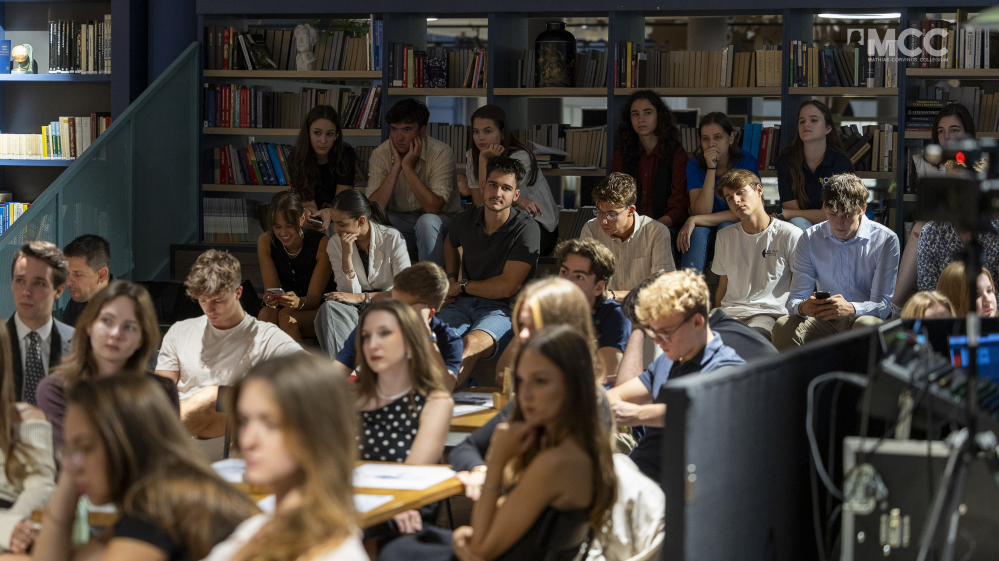
The discussion drew a large and engaged audience, particularly students, who actively participated by posing thoughtful questions to the panelists. The event demonstrated the importance of dialogue between countries with different contexts, illustrating how global insights can inspire local action and how best international practices can be adapted to national strategies. Participants gained valuable perspectives on renewable integration, nuclear energy, fossil fuel reduction, and the interplay of policy, technology, and community engagement in driving sustainable energy transitions.