
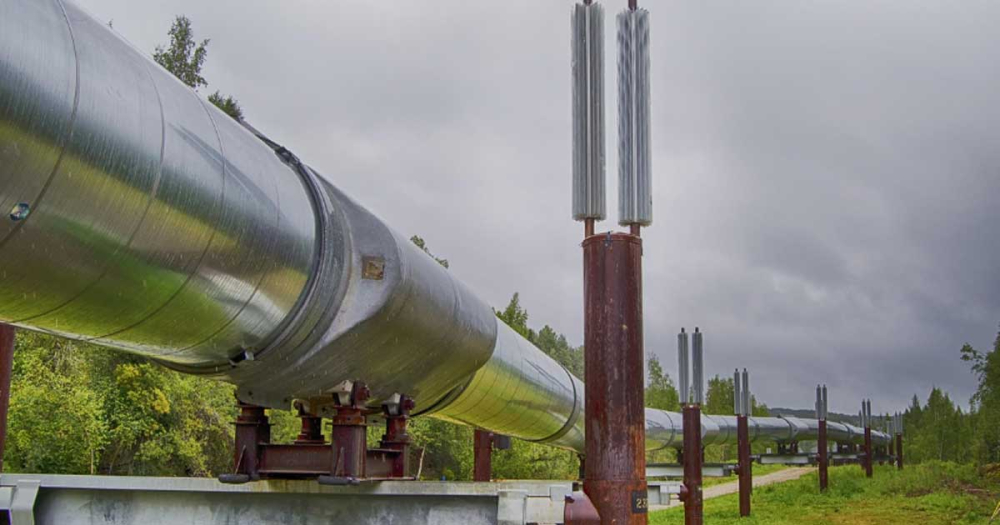

When energy supply becomes uncertain, governments must act to maintain stability. In late January 2026, oil deliveries through the Druzhba (Barátság) pipeline, which carries Russian crude through Ukraine to Hungary and Slovakia, were temporarily suspended. The outage underscored the pipeline’s strategic importance, supplying roughly two-thirds of Hungary’s crude imports. Hungary responded with coordinated measures, including the temporary suspension of diesel exports to Ukraine and the release of strategic reserves, ensuring continuity in domestic fuel supply.
The Croatian Minister of Economy, Ante Šušnjar, emphasized that while Croatia would not transport Russian oil through the JANAF system to Hungary or Slovakia, it could provide alternative crude sources fully compliant with EU law and OFAC regulations. He noted that the Adriatic pipeline could handle up to 15 million tons per year, exceeding the combined refinery capacities of Százhalombatta (HU) and Bratislava (SVK), meaning technical limitations were not an obstacle. The minister highlighted that the main driver of the dispute was price, as Russian oil is roughly 30% cheaper than alternatives. Croatian Prime Minister Andrej Plenković confirmed the country could guarantee 12 million tons annually, fully covering the refining needs of Hungary and Slovakia.
Since 27 January 2026, crude shipments through the Ukrainian section of Druzhba have remained halted. Hungary ensured all transit conditions were in place, yet deliveries did not resume. MOL Group released strategic reserves and secured approximately 500,000 tons of crude via Croatia, transported through JANAF. While maritime imports are more complex and costly, they provide a valuable alternative and enhance supply resilience. EU officials confirmed that, with reserves and adjusted logistics, there was no immediate short-term supply risk for Hungary or Slovakia.
|
Year |
Total Diesel Imports by Ukraine (million tons) |
Volume via Hungary (million tons) |
% via Hungary |
|
2022 |
5.2 |
1.0 |
19% |
|
2023 |
6.0 |
1.2 |
20% |
|
2024 |
6.5 |
1.5 |
23% |
|
2025 |
7.0 |
1.4-2.1 |
20-30% |
Source: Compiled by the author based on MOL Group (2026, February) investor updates on production and export volumes.
The Strategic Role of the Druzhba Pipeline
The Druzhba pipeline is one of the largest and longest oil pipelines in the world. Built in the 1960s, it has supplied Central European refineries for decades. For landlocked countries such as Hungary and Slovakia, pipeline deliveries are particularly important, as maritime imports involve higher logistical complexity and costs.
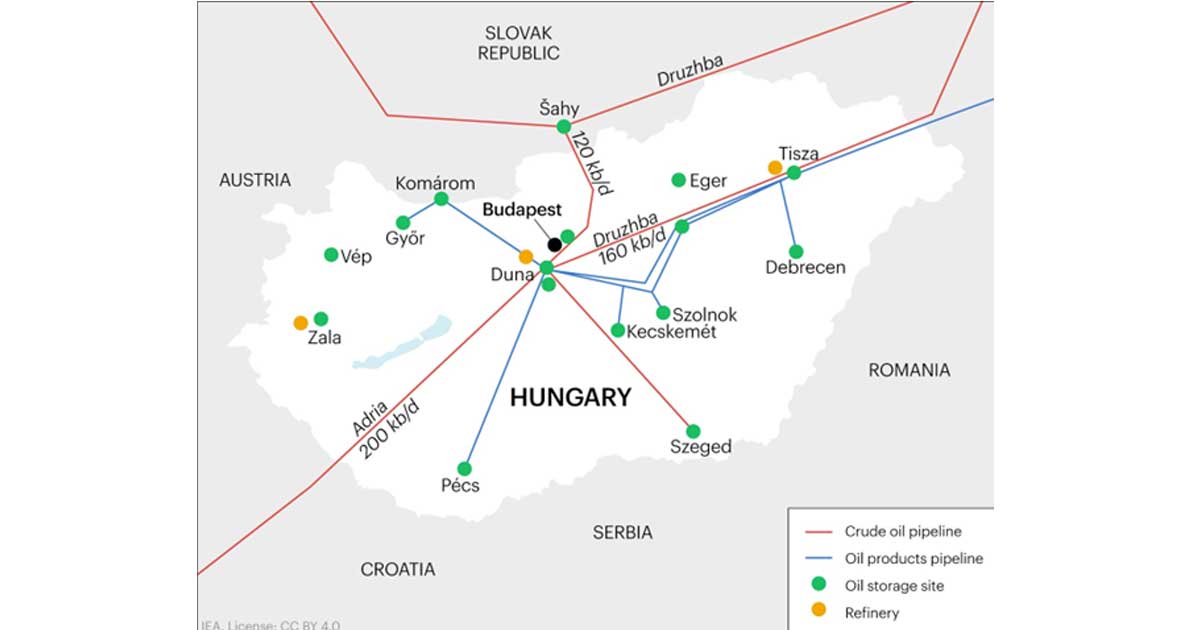
Approximately two-thirds of Hungary’s crude oil imports in recent years have arrived via the pipeline. The Százhalombatta refinery, operated by MOL Group, has a processing capacity of about 8.1 million tons per year and is technically optimized for Russian-origin crude. While MOL has invested in diversifying refinery capacity, the pipeline remains the main supply route.
Strategic Reserves and Alternative Supplies
Hungary maintains strategic crude oil and petroleum product reserves in line with national legislation and EU requirements. EU rules mandate that member states hold emergency stocks equivalent to at least 90 days of net imports or 61 days of inland consumption. For Hungary, this amounts to roughly 1.2-1.5 million tons of crude oil and refined products.
Following the Druzhba halt, MOL released strategic reserves to ensure that refinery operations continued without disruption. Simultaneously, the company secured approximately 500,000 tons of crude oil for delivery to the Croatian port of Omišalj. From there, oil can be transported via the Adriatic pipeline (JANAF system), which has an annual capacity of 10-14 million tons, although actual throughput toward Hungary depends on existing transit arrangements. While maritime imports are more complex and costly than pipeline deliveries, they provide a valuable alternative and increase supply resilience.
EU officials have confirmed that, with reserves and alternative logistics, there is no immediate short-term supply risk for Hungary or Slovakia. Hungary consumes roughly 7-8 million tons of crude oil per year, so the combination of strategic stocks and adjusted imports ensures market stability while broader transit issues are addressed.
Hungary’s Position: Reciprocity and Energy Sovereignty
Hungary’s temporary suspension of diesel exports to Ukraine has drawn international attention. Since 2022, Ukraine has imported between 5 and 7 million tons of diesel annually, with 20-30 percent in some months coming via Hungary. Hungary’s total refinery output of 8-9 million tons per year produces diesel, gasoline, and other products both for domestic use and regional exports.
The Hungarian government emphasized that energy cooperation must function in both directions. With approximately 65-70 percent of Hungary’s crude historically arriving via Druzhba, prolonged disruption affects refinery feedstock security. Petroleum products account for more than 30 percent of Hungary’s primary energy consumption, and transport fuels are critical for logistics and manufacturing sectors. In 2025, Hungary’s inland petroleum consumption was approximately 6.5-7 million tons.
Hungary also acts within the framework of EU law. When the EU imposed sanctions on Russian oil in 2022, Hungary and Slovakia were granted exemptions for pipeline imports due to infrastructure limitations. These exemptions remain valid and allow Hungary to maintain essential crude imports without violating EU rules. By relying on these legal mechanisms and controlled reserve releases, Hungary’s measures aim to preserve national and regional energy stability.
Slovakia’s Similar Concerns
Hungary is not alone in facing the consequences of the Druzhba disruption. Slovakia’s Bratislava refinery, operated by Slovnaft (a MOL subsidiary), has an annual processing capacity of 6-6.5 million tons. In recent years, 80-90 percent of its crude supply arrived via Druzhba. Slovakia’s total annual crude consumption is roughly 5-6 million tons, so pipeline interruptions directly affect both domestic production and regional trade. In response, Slovakia authorized the controlled release of strategic reserves, which, under EU rules, must cover at least 90 days of net imports.
Future Prospects
The current situation is likely to accelerate infrastructure investment and supply diversification in Hungary. Maritime imports through Croatia may increase, and pipeline capacities may be expanded to improve flexibility. MOL has invested heavily in refinery modernization, enabling the processing of a wider range of crude blends and reducing reliance on a single supply source.
Regional cooperation between Hungary and Slovakia may also deepen, particularly regarding storage coordination and emergency planning. Politically, Hungary is expected to continue defending national energy security while engaging constructively with European institutions. Stability, predictability, and reciprocity remain the guiding principles of regional energy cooperation.
Conclusion
Hungary’s response reflects a policy of careful planning and proportionality. By releasing strategic reserves, securing alternative maritime deliveries, and adjusting exports, Hungary has maintained domestic energy stability while complying with EU law. In a complex geopolitical environment, energy policy must balance long-term strategy with immediate operational needs, ensuring reliable supply, national stability, and strengthened resilience for the future.
References
Index.hu. (2026, February 19). Szó sem lehet arról, hogy Magyarország orosz olajat kapjon – erős üzenet érkezett Horvátországból. Retrieved from https://index.hu/gazdasag/2026/02/19/horvatorszag-olaj-olajszallitas-szijjarto-peter-ukrajna-baratsag-koolajvezetej-janaf-mol-ante-susnjar/
Hungary Today. (2026, February 17). Druzhba outage: MOL requests release of strategic oil reserves. Retrieved from https://hungarytoday.hu/druzhba-outage-mol-requests-release-of-strategic-oil-reserves/
MOL Group. (2026, February). MOL initiates the release of strategic crude oil reserves to maintain security of supply in the region. Retrieved from https://molgroup.info/en/investor-relations/investor-news/mol-initiates-the-release-of-strategic-crude-oil-reserves-to-maintain-security-of-supply-in-the-region-
Reuters. (2026, February 17). EU says no short-term oil supply risk for Hungary and Slovakia. Retrieved from https://www.reuters.com/business/energy/eu-says-no-short-term-oil-supply-risk-hungary-slovakia-2026-02-17/